

Namibia tour - Wilderness Best of Namibia Flying Safari – This 7 day Namibia Flying safari explores the red dunes of Sossusvlei, Damaraland and Etosha Game Reserve.
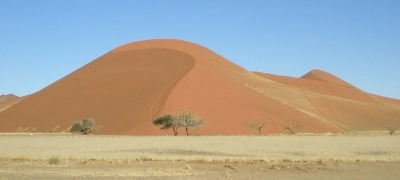
To observe Namibia from the air is an awe-inspiring experience: the vast expanses of moving, rippling sands, the great blue skies and grey of the ocean extending to the horizon.
This safari explores four distinct regions: the sands and red dunes of Sossusvlei; the icy, life-filled coasts at Swakopmund and Walvis Bay; the stark plains of Damaraland, with their desert-adapted elephants; and the amazing wildlife abundance on the savannah of Etosha.
This circuit-style safari offers daily departures, several camp choices in the northern region (where enormous concessions and private camps mix well with the advantages of nearby National Parks), and can be combined with add-ons to other regions, such as the iconic Skeleton Coast. Diverse activities enhance this in-depth encounter of the landscape, including an optional dolphin cruise, seafood lunch and quad biking.
We highly recommended an extension of a few nights in Swakopmund to experience the Atlantic Ocean's abundant life.
We can provide you with more details on the option of extending your safari in Swakopmund when you contact us.
There are no set departures as this Exploration is designed to offer flexibility and we encourage you to create your own itinerary and just use this as a guide to the kind of packages we can create. We can use other camps and have not applied any specials that may be on offer (in particular for these camps, there is sometimes an early bird offer).
Our Suggested Itinerary:
DAYS 1 & 2: Little Kulala Camp
Depart by light aircraft from Windhoek for a one-hour flight to Sossusvlei, Little Kulala Camp, for two nights to explore the Reserve.
Kulala Wilderness Reserve, a 40 000-hectare tract of land near the spectacular sights of Sossusvlei, borders the expansive Namib Naukluft Park. Today, after ten years of habitat rehabilitation, Kulala is once again home to of all forms of desert wildlife and provides convenient access to the splendor of the towering red dunes of the Namib. The Sossusvlei dunes rise dramatically more than 300 meters above the surrounding plains, and are surrounded by rugged, ancient volcanic mountains and open plains. Larger desert-adapted wildlife such as ostrich, springbok and gemsbok flourish here with carnivores such as bat-eared fox, Cape fox, cheetah and black-backed jackal often seen. Emphasis is laid on the smaller desert fauna, spectacular scenery and the incredible night sky. Unique birds include Dune Lark, Burchell's Courser, Ludwig's Bustard and Stark's Lark.
Little Kulala Camp: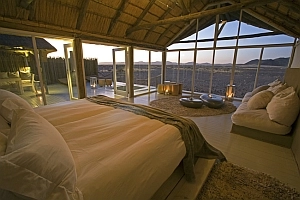 Here you will find the gateway to Namibia's extraordinary Sossusvlei, where the world's tallest dunes can be found. Set among ancient camel thorn trees on the dry Auab riverbed, Little Kulala offers first-rate facilities, charming hospitality and proximity to the towering red sand dunes of the Namib Desert.
Accommodation at Little Kulala consists of 11 climate-controlled, thatched "kulalas" (the word means 'to sleep') which merge impeccably into the timeless desert landscape, with exquisite fittings and fixtures, and innovative bleached decks - each with a private plunge pool. Each kulala has a rooftop 'skybed' for romantic stargazing, with both indoor and outdoor showers.
Little Kulala features an elegant entertainment area which includes a library, wine cellar, craft boutique, lounge and dining areas. Dining under the clear Namibian skies is a highlight. The interiors have been designed to provide an all-natural and unique experience in this most beautiful environment. The extensive use of neutral colors, gorgeous textures and natural light reproduce the soothing pastel tones of the desert. Pure linens, cottons and mohair dyed with natural vegetable dyes all make for a very organic camp which takes its inspiration from its surroundings, notably from the magnificent Dead Vlei in the middle of Sossusvlei. The overall mood and feel is cool, serene, organic and sheltering.
Activities at Little Kulala start with morning guided game drives to the spectacular dunes of Sossusvlei and include a visit to the fascinating Sesriem Canyon, scenic sundowners and hot air balloon excursions (at extra cost; weather dependent).
DAYS 3 & 4: Damaraland Camp
Fly over the Namib Desert for an alternative view of the dunes from the air and then due west to Meob Bay on the Skeleton Coast. The desert and Skeleton Coast scenery is spectacular, where the dunes and the desert meet the Atlantic Ocean, inland to Damaraland for two nights.
The 352 200ha Torra Conservancy lies in northern Damaraland, where the landscape is characterized by hills interspersed with valleys and dry riverbeds that occasionally flow, sustaining riverine vegetation through the long dry seasons. Early morning fog provides precious water to the flora and fauna, all of which has adapted superbly to this harsh environment. Despite its aridity, the area supports a surprisingly high diversity of wildlife including a healthy number of desert-adapted elephant and good populations of Hartmann's mountain zebra, southern giraffe, gemsbok, springbok, with occasional cheetah and black rhino as well interesting flora like euphorbias, pachypodiums and shepherd's trees. Birding is excellent with Herero Chat and Benguela Long-billed Lark common finds. The conservancy is the result of a highly successful partnership between Wilderness Safaris and the local Torra community - that has become an inspiration for communities and conservationists throughout Africa.
Damaraland Camp: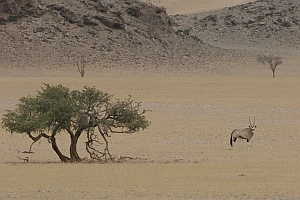 Damaraland Camp is situated in the Huab River Valley, arguably the most pristine wilderness area in Namibia, 90km from Torra Bay in the Torra Conservancy. It is lauded as one of the country's best camps, with sensational views of the surrounding desert plains, ancient valleys and soaring peaks of the Brandberg Mountains.
Winner of the 2005 WTTC Tourism for Tomorrow Conservation Award, the eco-friendly construction of Damaraland Camp has merged new technology with ancient methodology in an incredibly inventive manner. Another unique feature of this sustainable ecotourism venture is that it is owned and largely run by the local community - who have injected their own distinctive optimism and cheerful nature into the Damaraland Camp experience. This unusual flavour comes from the mixed heritage of the local peoples, which include Nama-Damara, Herero, Owambo, and the displaced Riemvasmakers of South Africa.
Accommodation at Damaraland Camp consists of 10 adobe-styled, thatched units each raised on individual wooden decking - part of which extends out to form a large viewing deck with magnificent vistas. Recently refurbished, each tent has en-suite facilities (shower only), a walk-in dressing area and built-in fan. Mosquito repellent is also provided.
The spacious, thatched living area features a restaurant and bar, complete with fireplace. Evening meals at Damaraland Camp are often prepared over an open fire and served out in the open in an area near to the camp lit by an assortment of small lanterns. The swimming pool is conveniently sited next to the bar. An open campfire and outdoor 'boma' can be enjoyed during calm evenings, with superb stargazing in the crystal-clear night skies.
Large game is not concentrated year-round here, with the natural cycle of rainfall dictating the seasonal movement of wildlife along the Huab River.
Activities at Damaraland Camp revolve around exploring the Haub River system, featuring guided nature drives and walks.
Morning and afternoon drives in search for desert-adapted elephant are a great favorite. Gemsbok, greater kudu, springbok, and occasionally lion, cheetah, elephants and black rhino can be spotted. Interesting flora such as euphorbias and shepherd's trees can be viewed on the way to some of Africa's best known rock engravings, including the famous Twyfelfontein etchings.
DAYS 5 & 6: Ongava Tented Camp or Ongava Lodge
Fly by light aircraft today from Damaraland to Ongava Game Reserve for a further two-night stay at the camp of your choice. Highlights are the game drives into Etosha National Park as well as night drives, nature walks and hides on the private Ongava Game Reserve.
On the southern boundary of Etosha National Park and forming a buffer to the Park lies Ongava Game Reserve, a prolific 30 000ha private concession. It is a haven to large concentrations of wildlife: notably lion, cheetah, springbok, gemsbok, wildebeest, Burchell's zebra, Hartmann's mountain zebra, waterbuck, red hartebeest, giraffe, eland and the largest population of the endemic black-faced impala outside of Etosha. The Reserve is also known for the successful reintroduction of white and black rhino. Bird life is prolific with 340 species seen, amongst them 10 of Namibia's 14 endemic bird species including White-tailed Shrike, Short-toed Rock Thrush, Hartlaub's Francolin, Rüppell's Parrot and raptors in abundance. Ongava also provides easy access to the prime game viewing areas of western Etosha, Namibia's premier wildlife destination.
Activities at Ongava Tented Camp & Ongava Lodge revolve around day and night wildlife-viewing drives, visiting hides that overlook waterholes and walks with experienced guides. The Ongava Game Reserve features much of the characteristic wildlife of the area, with both desert-adapted black and white rhino to be seen as well as lion.
Game drives and daytrips into the easily accessible Okaukuejo area of Etosha National Park are rewarding, with sightings of lion, elephant, gemsbok, springbok, red hartebeest, and white and black rhino. Guests at Ongava Tented Camp and Ongava Lodge share a dedicated guide and Land Rover, ensuring the best possible nature experience at one of Africa's great wildlife destinations.
The Ongava Game Reserve is unique in that it is one of the few private game reserves in southern Africa where there is a chance of seeing both black and white rhino. For those who enjoy close wildlife encounters, tracking white rhino on foot with a guide is a highlight not to be missed.
Ongava Tented Camp 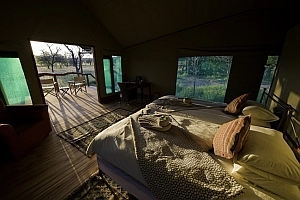 Ongava Tented Camp is one of Namibia's best kept secrets. Located in the much-lauded Ongava Game Reserve to the south of the Etosha National Park, it overlooks a nearby waterhole to which a plethora of wildlife congregates to drink.
Constructed from stone, canvas and thatch, Ongava Tented Camp accommodates 16 guests in eight large comfortable Meru-style tents - all with en-suite facilities, open air showers and private verandas. The family unit sleeps four.
Relaxation at Ongava Tented Camp typically takes place around the main area with its relaxing bar and swimming pool, watching the wildlife that comes to drink at the waterhole.
Ongava Lodge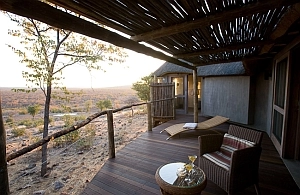 Ongava Lodge is cleverly constructed on a small hill in the Ongava Game Reserve against the southern boundary of the Etosha National Park. From up here guests can enjoy a host of thirsty wildlife congregating around the waterhole.
Accommodation at Ongava Lodge consists of 13 chalets and 1 family room, attractively built out of brick, rock and thatch. Each chalet has an en-suite bathroom with flush toilet, shower and double hand basins. Air-conditioning and overhead fans keep guests cool in summer. Mosquito nets are fitted to the windows and each room features a tea/coffee station and a safe. The rooms have glass-fronted doors which lead out onto a private, covered veranda, overlooking the plains.
There are impressive views of the waterhole and surrounding plains from the main lounge, bar and dining areas. Meals are either served in the main dining area under thatch or on the dining deck under the stars.
DAY 7: Windhoek
Depart Ongava by light air charter back to Windhoek where the safari ends at either Windhoek Eros or Windhoek International Airport.
This Best of Namibia Circuit (Sossusvlei, Damaraland and Etosha regions) itinerary features the most popular areas of Namibia, ideal for the first time visitor, and includes 2 nights at Little Kulala, 2 nights at Damaraland Camp and 2 nights Ongava Lodge OR Ongava Tented Camp. Priced in Rands (equivalent to Namibian Dollars), accommodation is on a fully inclusive basis (includes all meals, lodge activities, park fees) and flights are comprised of seat-in-plane air transfers from Windhoek to Sossusvlei, Sossusvlei to Swakopmund to refuel, Swakopmund to Damaraland, Damaraland to Ongava and Ongava back to Windhoek.
Please note this itinerary will be costed when we have your dates and number of people traveling so as soon as we have that, we can work it out for you.
Please note: Luggage restriction is 20 kg (44lbs) per person in soft bags.
This safari package is usually accommodated at Ongava Tented Camp, however, can be substituted by Ongava Lodge at the same rate.
EXCITING ADD-ON
We highly recommend adding a 3 night stay in the pristine and isolated Hoanib Skeleton Coast. Here you can experience the endless isolated coastline, mountains and vast plains plus one of the greatest concentrations of desert-adapted wildlife in Namibia. Another great addition is Serra Cafema Camp, where you can meet the nomadic Himba people and explore the lush banks of the Kunene River which are in total contrast to the surrounding desert.
Book your This email address is being protected from spambots. You need JavaScript enabled to view it. now or enquire about other This email address is being protected from spambots. You need JavaScript enabled to view it..